
A brace should support the area that needs help without making daily movement harder than necessary. We help you choose the right brace type, size, and support level.
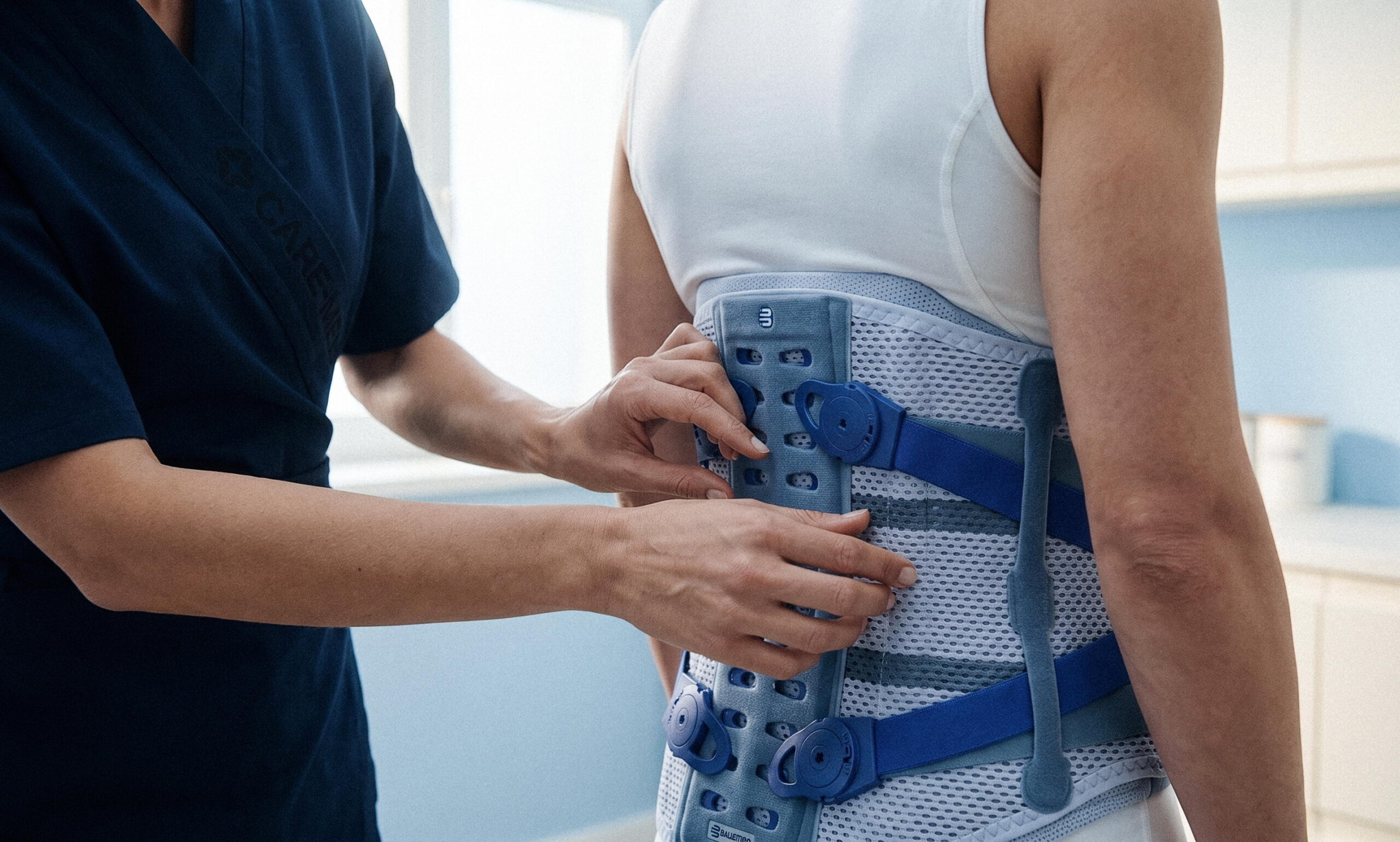
Targeted joint and body support
Body braces can help stabilize joints, support recovery, reduce strain, and provide confidence during movement.
Proper fitting matters because comfort and support depend on size, structure, and use.
What happens during the appointment
Review of symptoms and any prescription
Measurement and fit assessment
Selection of brace type and support level
Instruction on wearing and adjusting
Care and replacement guidance
What you leave with
Brace recommendation
Fitting and adjustment instructions
Insurance documentation support when applicable
Follow-up guidance if fit changes
Frequently asked questions
Care-Med provides assessment, fitting, and product guidance. We do not replace emergency care or specialist medical advice. If you have sudden swelling, severe pain, shortness of breath, signs of infection, or a suspected blood clot, seek urgent medical care.
What types of braces do you fit?
Back, knee, ankle, foot, wrist, hand, elbow, and shoulder braces.
Can a brace prevent injury?
A brace may help support vulnerable areas during activity, but it should be chosen based on your condition and advice from a healthcare professional.
Can children use braces?
Sometimes, when recommended and properly fitted. Pediatric needs should be assessed carefully.
